How Nylon is Made
A brief breakdown of our processes
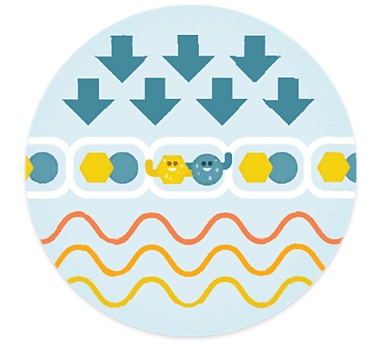
1. What is Nylon 6,6?
Nylon 6,6 (also known as polyamide 66, or PA66) is the resulting combination of two starting materials that, under pressure and heat, join to form a chain called a polymer that INVISTA’s customers use to manufacture goods.
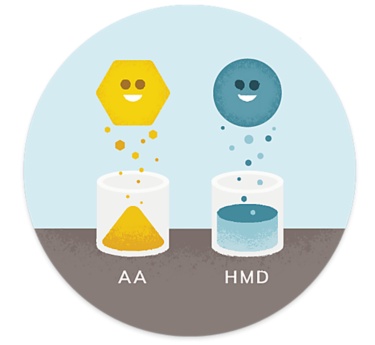
2. INVISTA’S role in Nylon 6,6
At INVISTA, we make nylon 6,6, from these two starting materials: adipic acid (AA) and hexamethylene diamine (HMD), which INVISTA specializes in making.
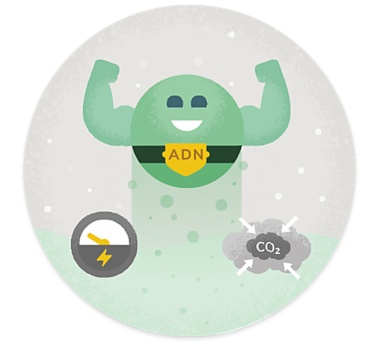
3. Making ADN - our process
In order to make HMD, we first need to make a critical ingredient called adiponitrile (ADN). Our proprietary ADN process creates better product yields utilizing less energy than today’s competing technologies.
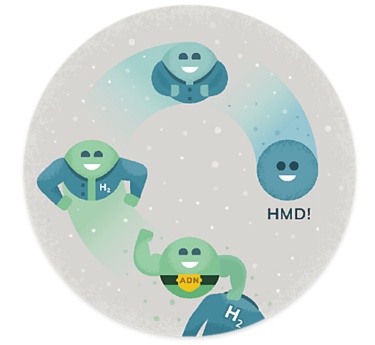
4. Making HMD
Next, we have a process for creating HMD by utilizing catalysts to hydrogenate ADN into HMD - the first six-carbon molecule in nylon 6,6.
5. Creating salt
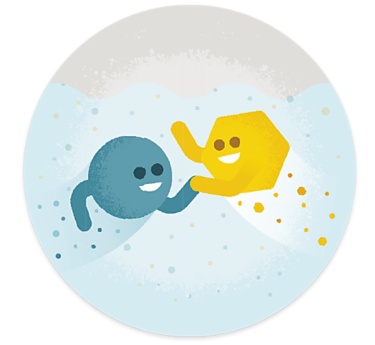
We then take our HMD and mix it with adipic acid, or the next six-carbon molecule in nylon 6,6. This creates a salt solution in water.
6. Applying pressure
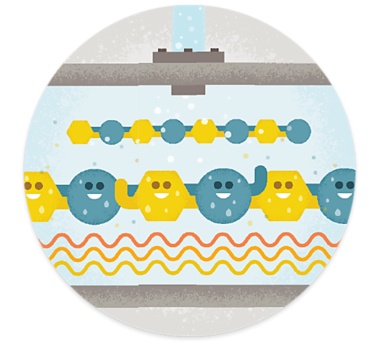
The salt is then subjected to high heat and pressure, and we vent the water, which allows the molten polyamide chains to lengthen and strengthen.
7. Making pellets
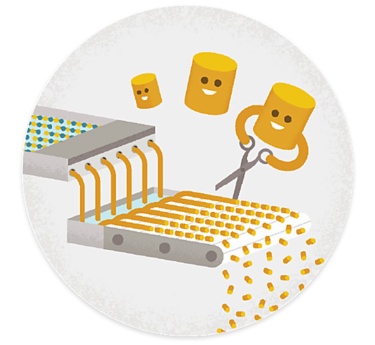
Finally, we extrude these molten polyamides into a cool water trough, where they solidify and are then sent to a cutter to be processed into nylon 6,6 pellets.