
Reducing the carbon footprint of Nylon 6,6
Industrial sectors like automotive and transportation are the backbone of modern life, and INVISTA supplies key ingredients and materials for today’s vehicles. As such, we acknowledge the importance of environmental stewardship – see how INVISTA is committed to the continuous improvement of global nylon 6,6 production.
The automotive industry relies on Nylon 6,6
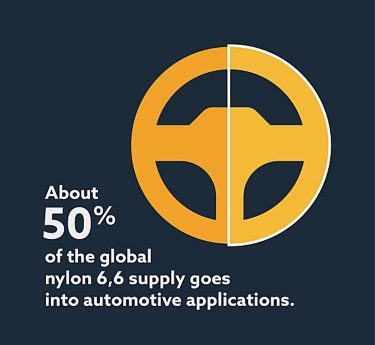
Nylon 6,6 is an ideal thermoplastic replacement for metal in many automotive applications1 due to its mechanical, chemical resistance and thermal material properties. It is used in vehicle components like cooling systems, engine components, airbags, seatbelts and more. And a key ingredient in nylon 6,6 production is a chemical intermediate called adipic acid (AA).
The connection between adipic acid and N₂O
AA production can result in relatively high carbon dioxide equivalent (CO2e) emissions in the form of nitrous oxide (N2O), a greenhouse gas, unless modern abatement techniques are utilized.
An opportunity for N₂O abatement in China
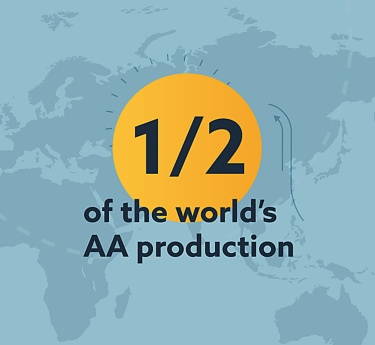
Though AA producers in North America, Europe and Asia – including INVISTA – have been using N2O abatement technology since the 1990s, many Chinese producers have not yet implemented the same measures. Much of the automotive supply chain runs through China, as does 1/2 of the world’s AA production2, so N2O abatement efforts in China could have a significant effect on global emissions.

Expanding our licensing to drive major emissions reductions
INVISTA has been a global leader in N2O abatement technology for more than two decades, having deployed and improved abatement capabilities at multiple AA facilities – both former and existing – since the late 1990s. We have advanced N2O abatement globally by licensing our technology to adipic producers in China and seeking to purchase abated AA supply for our polymer production in Shanghai.
Decreasing the carbon footprint of Nylon 6,6
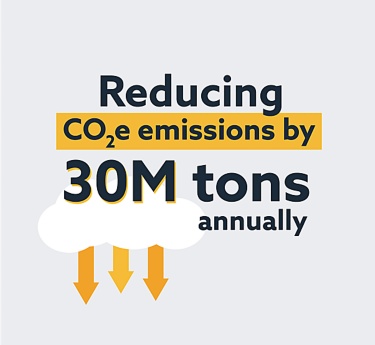
INVISTA will contribute to the reduction of approximately 30 million tons of CO2e per year through three new licensing agreements with China-based AA producers, expected to deploy over the next few years3. This collaboration could help decrease the carbon footprint of downstream nylon production while cutting emissions across the automotive materials supply chain.
- 1 According to the Wood Mackenzie 2019 PA66 Nylon Tyrecord Markets Report and Wood Mackenzie Global Polyamide Strategic Planning Outlook – April 2023
- 2 According to the Wood Mackenzie Global Polyamide Strategic Planning Outlook – April 2023
- 3 This approximation includes estimated CO2e emissions reductions from existing AA assets in addition to the avoidance of potential CO2e emissions from new construction. This calculation is based on data in the Climate Action Reserve’s China Adipic Acid Production Protocol Draft. The reductions referenced herein represent CO2 equivalent emissions reductions up to a minimum threshold for N2O abatement efficiency of 90% (above which, voluntary offsets may be sold).
Our latest stewardship news
Catch up on the latest INVISTA stories and headlines focused on our commitment to responsible environmental stewardship and sustainable operations.